
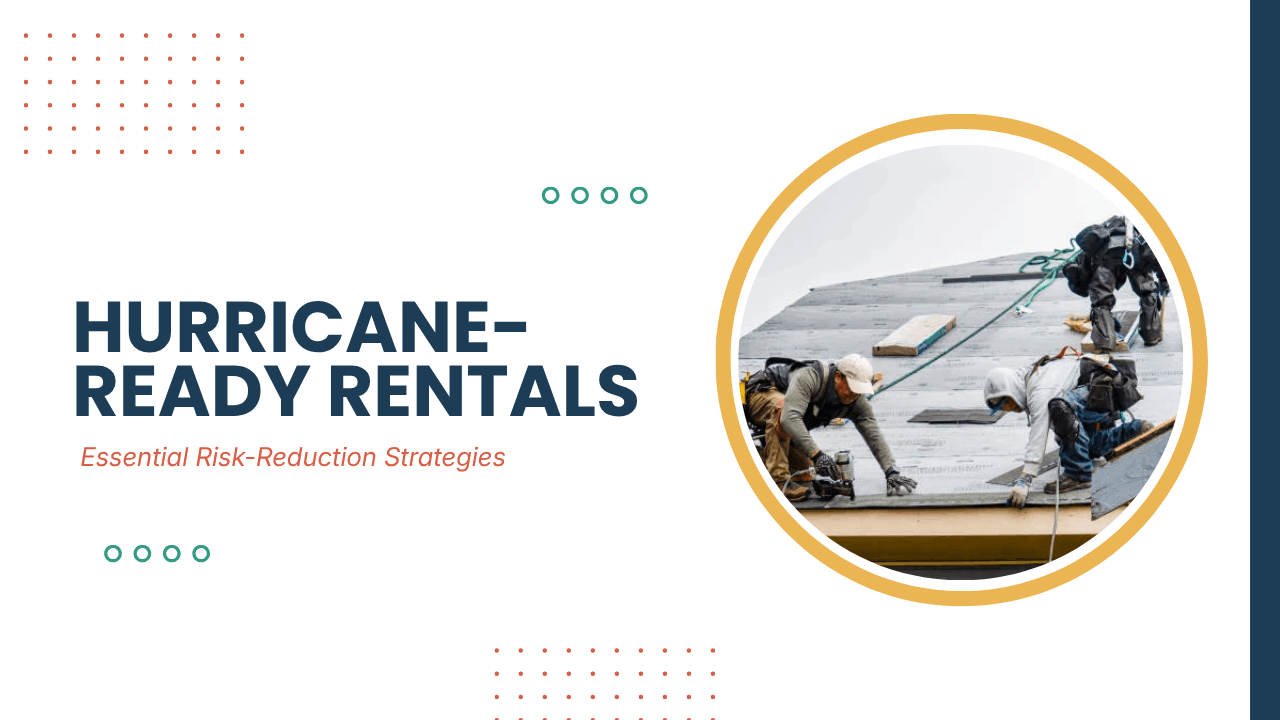
Is it already time to be thinking about hurricanes again?
If you’re renting out property in southeast Florida, you should always be thinking about hurricanes, and how to protect your property from the damage they can do.
We were spared in 2025, but everyone remembers the active season for tropical storms and hurricanes in 2024. It seems like every storm is just a little bit stronger. Hurricane season runs from June through November, with peak activity typically occurring in late summer and early fall. Preparing early and working with the right professionals can make the difference between manageable disruption and long-term financial strain.
Let’s talk about the best strategies to protect your property and reduce the risk of damage from hurricanes and tropical weather.
Quick Summary:
|
Preparation Is Protection: Preventative Maintenance That Reduces Risk
One of the small mercies with hurricanes is that we often have at least a few days to prepare for them. And that’s pretty important because it means we can make sure our properties are in the best possible shape before a storm arrives. Small vulnerabilities often become major problems during high winds and heavy rain. Loose roof shingles, clogged gutters, aging window seals, overgrown trees, or drainage issues may not seem urgent until a storm hits.
Routine property evaluations and preventative maintenance help strengthen your rental home before hurricane season arrives. Reinforcing roofing materials, inspecting siding, ensuring proper drainage, trimming back tree limbs, and sealing openings all reduce the likelihood of costly storm damage.
Preventative action is always less expensive than emergency repairs, and that’s why we like to work all year long to protect your property from hurricanes.
Create a Clear Emergency Plan for Every Property
Does your rental property have a defined hurricane response plan? Have evacuation procedures been communicated to tenants? Are emergency contacts easily accessible?
Many owners, especially out-of-state investors, don’t realize how critical formal planning is until a storm is approaching. An organized emergency plan should include:
Tenant communication procedures
Property securing protocols
Vendor and contractor contacts
Post-storm inspection steps
Utility and safety coordination
Preparation removes panic from the equation. When tenants know what to expect and who to contact, confusion decreases and safety improves.
Consistent and Calm Tenant Communication
In the days leading up to a hurricane, uncertainty can create anxiety. Clear communication from landlords and property management partners can help tenants feel supported and informed.
Before a storm, tenants should receive guidance on:
Securing outdoor belongings
Protecting windows and entry points
Understanding evacuation recommendations
Emergency contact information
During and after the storm, updates about property access, inspections, and next steps are essential.
Responsive communication builds trust and trust leads to stronger tenant relationships long after hurricane season ends.
Insurance Readiness and Post-Storm Recovery
Insurance protection has become increasingly complex in Florida. Rising premiums, policy restrictions, and evolving coverage requirements make it more important than ever to review policies carefully. You’ll need your insurance when you have a hurricane approaching, however. Rental property owners should confirm:
Windstorm and hurricane coverage is active
Deductibles are clearly understood
Flood insurance is in place if needed
Loss-of-rent provisions are included
After a storm, documentation becomes critical. Prompt property inspections, detailed photos, written damage reports, and contractor estimates all support smoother insurance claims.
Navigating claims alone can be overwhelming. Having experienced professionals coordinate inspections, communicate with adjusters, and track repairs can significantly speed up recovery and reduce downtime. In some cases, government disaster relief programs may also become available. Understanding eligibility and filing procedures requires local knowledge and timely action.
Local Presence Matters During Storm Season
When hurricanes pass, immediate on-site assessment is essential, but only once conditions are safe. As local property management partners, we are prepared to:
Inspect roofs, windows, and structural components
Identify flooding or water intrusion
Secure exposed areas
Coordinate emergency repairs
Communicate real-time updates
Fast action limits further damage. Water intrusion, for example, becomes more expensive the longer it goes untreated. Quick mitigation reduces mold risk and structural deterioration. Equally important, prompt attention reassures tenants and helps maintain habitability whenever possible.
Minimizing Vacancy and Income Disruption
Storm damage can lead to temporary displacement or extended vacancies if repairs are delayed. For rental property owners, that translates directly into lost income. Well-prepared properties experience fewer interruptions. Stronger infrastructure, better maintenance practices, and organized response plans reduce repair timelines and speed tenant return.
Properties that recover quickly retain value and marketability. Those that are slow to respond may face prolonged vacancy, higher turnover, and reputational challenges.
Preparedness protects not only the physical asset but also your revenue stream.
Hurricane Preparedness as a Long-Term Risk Management Strategy
In Florida, hurricane readiness reduces the risk of loss. As storms grow more intense and unpredictable, rental properties face increased exposure to:
High wind damage
Flooding and water intrusion
Roof failure
Tree and debris impact
Power-related system issues
Without preparation, these risks can result in significant repair costs and long-term depreciation.
However, owners who take intentional, preventative steps position themselves differently in the market. Prepared properties not only get through the worst storms, they also enjoy higher tenant confidence and stronger lease renewals. There are fewer emergency repair expenses and faster post-storm recovery.
Tenants are more likely to stay in homes that feel secure and professionally managed, especially in regions like ours, which are prone to severe weather.
Peace of Mind for Florida Rental Owners
 Hurricane season is stressful for everyone. Preparation, we have found, transforms uncertainty into action.
A structured maintenance program, a clear emergency plan, strong tenant communication, and coordinated insurance support form a comprehensive defense strategy for rental properties.
Florida real estate remains a strong long-term investment. But protecting that investment requires acknowledging the realities of our climate and planning accordingly. When hurricane season arrives, rental property owners should feel confident. You don’t want to be scrambling. Proactive management, local support, and thoughtful preparation ensure your property is positioned to weather the storm and recover quickly.
We can take a look at your southeast Florida investment property and ensure it’s ready for any potential hurricanes. Contact us at SunWorld Group.
.webp)